Loyalty Tiers Open Doors to Progressive Jackpot Pools in Online Gaming Environments
Ulrich Hoffmann · Aug 27, 2026
Loyalty Tiers Open Doors to Progressive Jackpot Pools in Online Gaming Environments
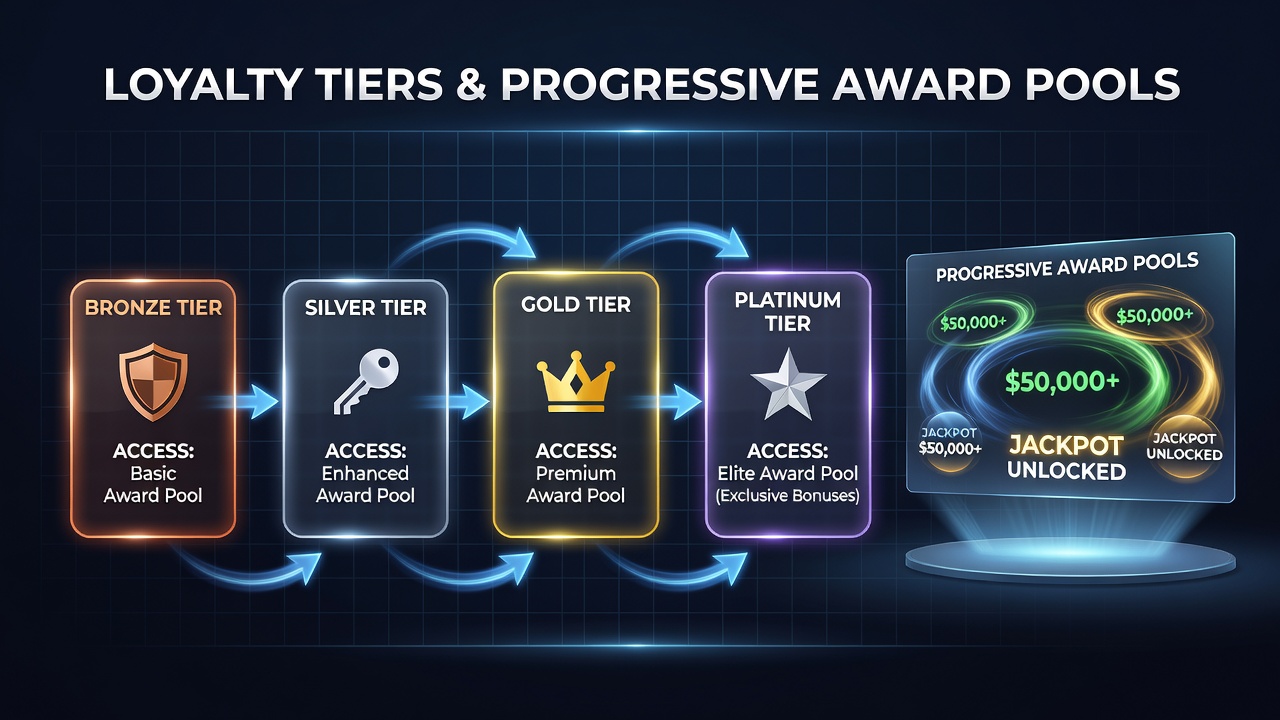
Digital casino platforms structure loyalty programs around tiered systems that determine player eligibility for progressive award pools, where contributions from wagers accumulate into shared prize funds across multiple games and users. These tiers typically range from entry-level categories such as bronze or silver through to advanced platinum and diamond levels, with each stage unlocking incremental benefits tied directly to accumulated play volume and account activity metrics tracked by platform algorithms.
Platform operators calculate tier progression using points earned from real-money bets, deposit frequency, and session duration, while progressive pools operate on a contribution model where a fixed percentage of each qualifying wager feeds into the growing jackpot total. Higher tiers often receive elevated contribution rates or priority allocation to exclusive pool variants that maintain separate, faster-growing prize structures unavailable to lower-level accounts.
Core Mechanics of Tier-Based Pool Access
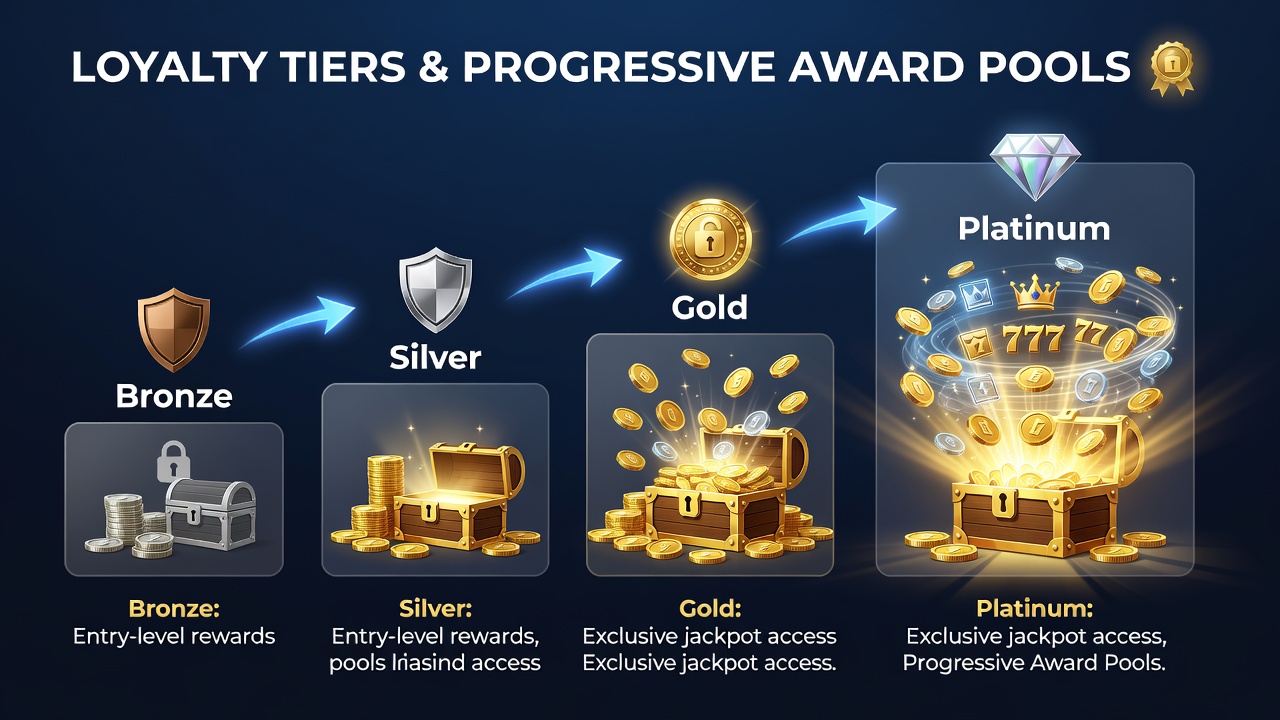
Observers note that eligibility rules vary across operators yet follow consistent patterns where bronze members contribute to base progressive networks at standard rates, whereas gold and platinum accounts gain entry to accelerated pools that distribute larger shares of the total jackpot upon winning combinations. Data from major platforms indicates that platinum tiers frequently access multi-site progressive systems linking thousands of users, resulting in substantially higher average payout values compared to single-site pools restricted to entry tiers.
Researchers tracking iGaming metrics have documented how loyalty databases integrate with jackpot engines to verify tier status in real time, automatically routing eligible wagers into the appropriate award pool without requiring manual player intervention. This integration allows platforms to maintain separate contribution percentages per tier, with higher levels sometimes receiving bonus multipliers applied to their jackpot contributions that accelerate pool growth for the entire network.
Regional Variations in Implementation
European operators tend to emphasize tier advancement through combined casino and sports betting activity, while North American platforms often separate slot-focused progressive pools from table game variants, granting tier-specific access accordingly. As of August 2026, reports compiled by the Nevada Gaming Control Board show increased adoption of tier-linked progressive structures among licensed digital operators, with platinum accounts demonstrating participation rates exceeding 40 percent in exclusive high-value pools.
Australian regulatory frameworks require transparent disclosure of how loyalty tiers influence progressive eligibility, prompting operators to publish detailed contribution tables that outline exact percentages allocated from each wager level. Those who've examined these disclosures find that diamond-tier players in certain jurisdictions receive guaranteed minimum contributions to major progressive networks regardless of individual bet size, creating a structural advantage built into the reward architecture.
Technical Integration and Player Tracking
Software providers such as those supplying backend systems to multiple operators embed tier verification protocols directly into progressive jackpot modules, ensuring that only verified accounts at sufficient levels can trigger the highest payout brackets. This technical layering prevents lower-tier players from claiming prizes reserved for advanced loyalty segments while still allowing all participants to contribute to base pools that fund the overall ecosystem.
Studies from academic institutions examining player behavior patterns reveal that tier progression correlates strongly with increased engagement in progressive titles, since visible access indicators on dashboards encourage continued play to maintain or advance status. Platform analytics further demonstrate that once players reach gold tier, average session lengths involving progressive games increase measurably compared to bronze-level activity on the same titles.
Future Developments and Industry Standards
Industry associations continue developing standardized reporting frameworks that would require operators to disclose tier-specific contribution rates to progressive pools across all jurisdictions. These efforts aim to create comparable data sets that allow analysis of how loyalty structures influence overall prize distribution and player retention metrics on a global scale.
Conclusion
Loyalty tiers function as structured gateways within digital casino ecosystems, channeling player activity into progressive award pools through verified contribution mechanisms and tier-specific eligibility rules. Platform data, regulatory disclosures, and technical implementations collectively illustrate how these systems allocate access and influence prize accumulation across diverse operator environments. Continued evolution of these frameworks reflects ongoing adjustments to player tracking technology and regional compliance requirements.