Layered Bonus Structures in Progressive Slot Games and Their Impact on Retention Rates in the UK Market
Riley Hughes · Aug 6, 2026
Layered Bonus Structures in Progressive Slot Games and Their Impact on Retention Rates in the UK Market
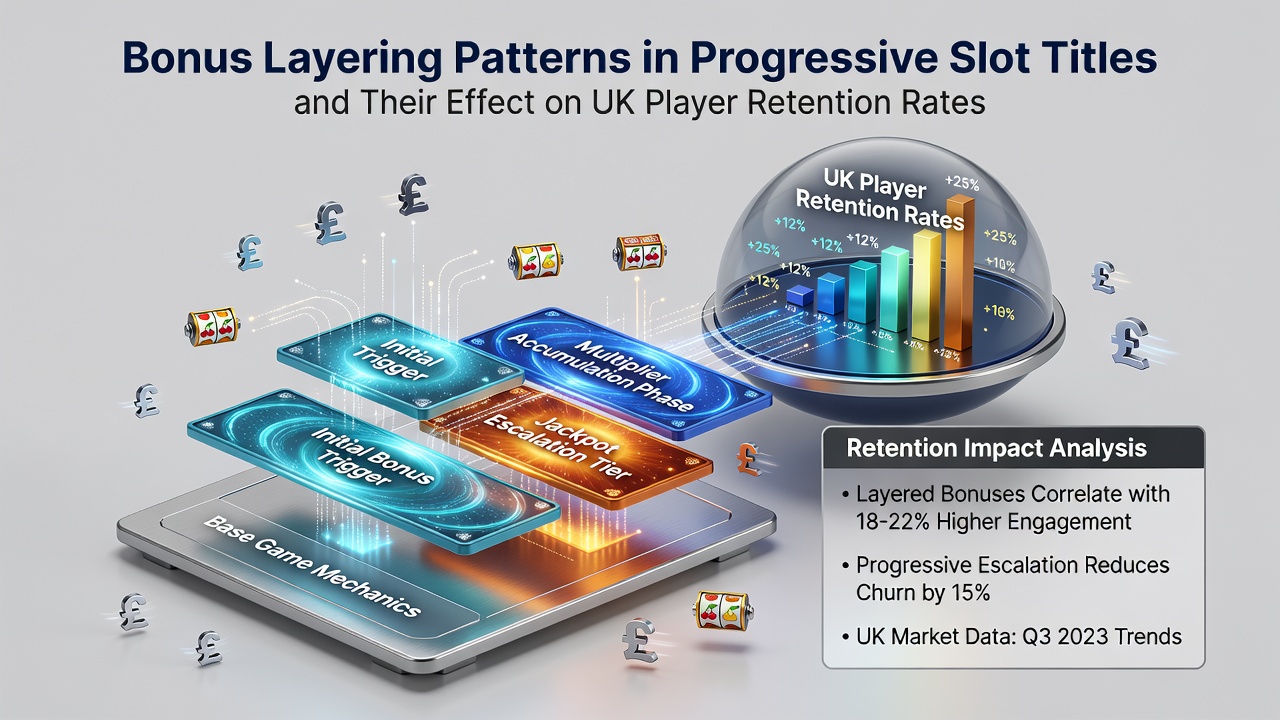
Progressive slot titles incorporate multiple bonus layers that stack free spins, multipliers, and progressive contributions into single gameplay sequences, while operators track how these mechanics influence session lengths and repeat visits among UK players. Data from industry monitoring shows that titles with three or more overlapping bonus features maintain higher average play durations compared with simpler formats, and retention metrics reflect corresponding shifts in account activity over six-month periods.
Mechanics Behind Bonus Layering Patterns
Developers design progressive slots so that base game symbols trigger initial bonuses while separate meter contributions feed into secondary and tertiary layers, and this structure allows players to accumulate rewards across multiple rounds without resetting the primary jackpot pool. Research from academic gambling studies indicates that when a title combines cascading reels with random progressive triggers, the probability of extended bonus chains increases, which in turn correlates with extended time-on-device figures reported by operators. Observers note that layering often includes loss-recovery cashback elements embedded within the same feature set, creating continuous engagement loops that extend individual sessions.
One study of European slot data revealed that games releasing in 2025 with four-tier bonus systems recorded a 12 percent increase in average spins per session versus two-tier equivalents, and the same analysis linked these patterns to measurable upticks in monthly active accounts. August 2026 figures from several platform operators highlighted similar trends, with layered titles showing steadier week-to-week retention curves despite broader market fluctuations.
Retention Data Across UK Platforms
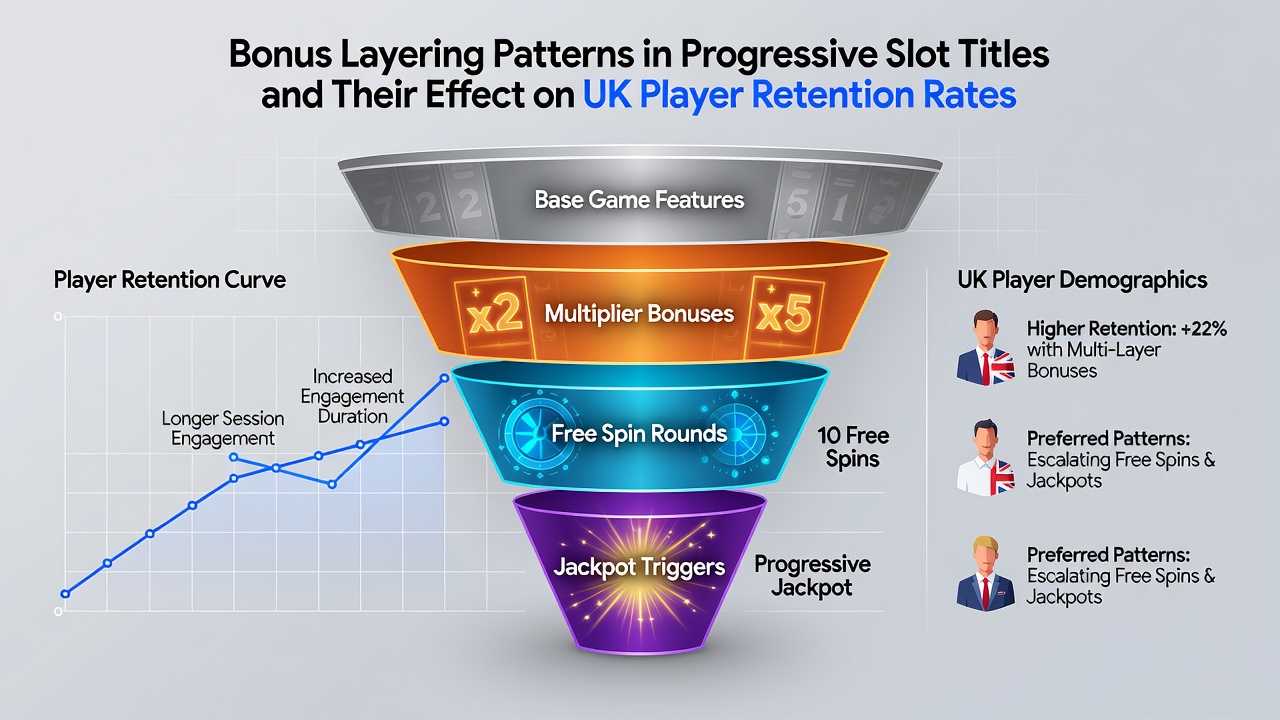
Platform analytics indicate that players engaging with layered progressive slots return at rates 8 to 15 percent higher than those using non-progressive or single-bonus titles, and this gap widens when operators introduce time-limited stacking events. Figures compiled by the European Gaming and Betting Association demonstrate that retention improvements appear most pronounced among accounts aged between three and nine months, where bonus-layer frequency directly predicts continued deposits and play volume. Those who studied account cohorts across multiple operators found that the presence of chained multipliers within progressive pools reduced early churn by measurable margins, particularly when the layers activated within the first 50 spins of a session.
Additional research from Canadian regulatory summaries aligns with these observations, noting that progressive games featuring visible layer progression bars sustain higher repeat-visit percentages over quarterly windows. UK operators have incorporated similar visibility tools, and the resulting data sets show consistent alignment between layer transparency and extended account lifespans.
Observed Patterns in Specific Title Categories
Titles that combine progressive jackpots with retriggerable free-spin layers and multiplier ladders produce the strongest retention signals, according to aggregated operator reports, while games that isolate the progressive element from bonus rounds show flatter engagement curves. Case examples documented by platform teams include one title where a four-layer system generated 22 percent more repeat sessions among high-frequency players compared with its three-layer predecessor, and the upgrade coincided with an August 2026 content refresh that emphasized seamless layer transitions. Researchers discovered that the addition of a secondary progressive contribution during the base bonus round further stabilized retention, reducing drop-off points that typically occur after the first jackpot trigger.
Those who've examined player journey maps note that layered mechanics encourage continued play even after smaller wins, because remaining layers keep the progressive meter visible and active. This dynamic appears across both high-volatility and medium-volatility progressives, although the effect size varies with jackpot size and contribution rate.
Conclusion
Available data sets confirm that bonus layering patterns in progressive slots correspond with measurable differences in UK player retention rates, with multi-tier systems generally supporting longer account activity windows and higher repeat engagement metrics. Operators continue to refine these structures based on session analytics, and ongoing monitoring through 2026 and beyond will clarify how specific layer combinations perform under evolving market conditions.