Gaming Firms Form Alliances to Create Larger Slot Jackpots Through Shared Resources
Riley Hughes · Oct 20, 2026

Gaming Firms Form Alliances to Create Larger Slot Jackpots Through Shared Resources
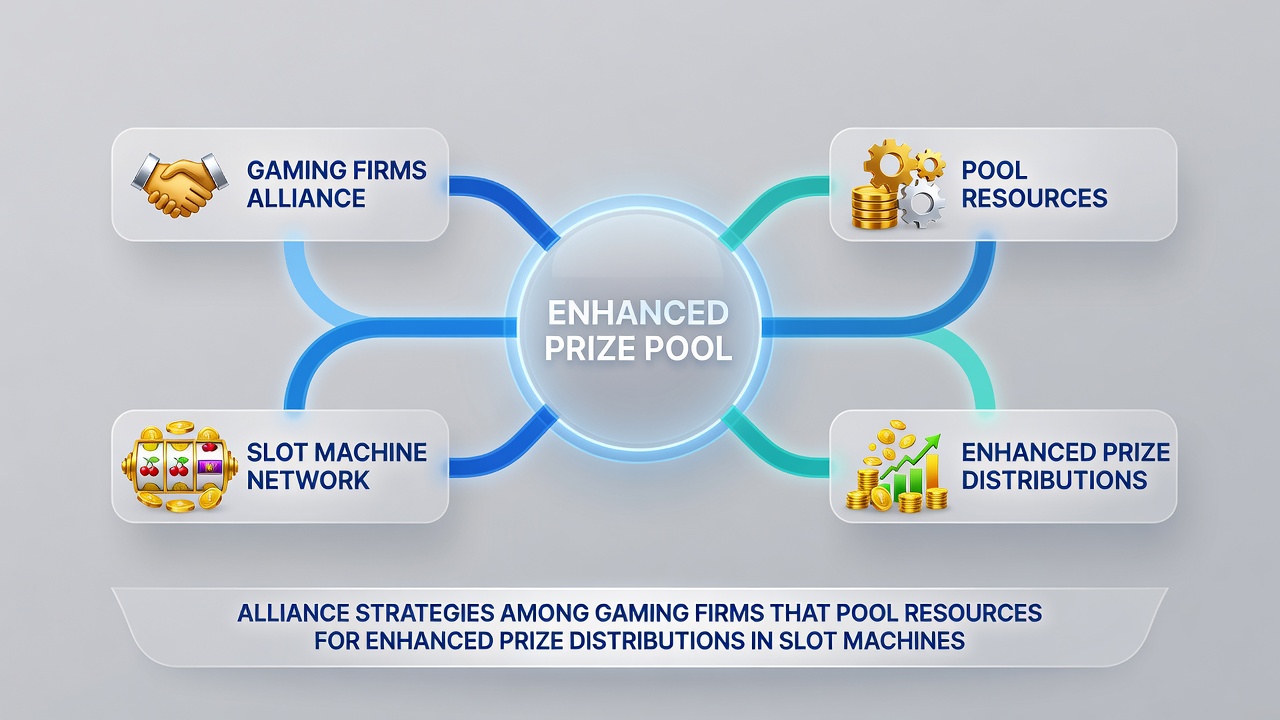
Multiple gaming operators have established formal alliances that combine their slot machine networks and financial contributions to build progressive jackpot pools exceeding what any single firm could sustain alone, and this approach has expanded across several regions since the early 2010s. Companies link their machines through centralized servers so that a portion of each wager feeds into a shared prize that grows until triggered, which allows smaller venues to offer multimillion-dollar payouts that compete with larger casino groups.
Mechanics of Resource Pooling in Progressive Systems
Operators contribute a fixed percentage of coin-in from designated slots to a common fund managed by a third-party administrator or joint venture, while technical standards require real-time reporting of meter readings to prevent discrepancies. The arrangement spreads both the cost of the growing liability and the marketing advantage of advertising massive prizes, and data from linked networks shows that average jackpot sizes increase by factors of three to five compared with standalone machines. Regulatory bodies in Nevada and New Jersey have approved these multi-site configurations provided each participant meets independent audit requirements, and similar frameworks now operate in parts of Australia where state gaming commissions oversee cross-venue contributions.
Regional Examples of Alliance Structures
One established model operates across several Las Vegas Strip properties where a central clearinghouse tracks contributions from dozens of machines and distributes winnings according to pre-agreed formulas based on each site's percentage of total play. In Queensland, Australia, a consortium of clubs and hotels pools resources for linked progressives that have produced prizes above AUD 1 million on multiple occasions, according to reports from the Queensland Office of Liquor and Gaming Regulation. Canadian provinces including Ontario have introduced similar linked systems through the Alcohol and Gaming Commission of Ontario, enabling smaller gaming halls to participate without bearing full jackpot risk.
These alliances typically include contractual clauses that specify exit procedures, minimum contribution periods, and dispute resolution through arbitration, which reduces operational friction when one partner seeks to withdraw. Technical integration relies on standardized protocols such as the Slot Accounting System and Gaming Standards Association specifications, allowing different manufacturers' cabinets to feed the same pool without custom software for each location.
Financial and Operational Impacts Observed in 2026
Industry figures released in October 2026 by the American Gaming Association indicate that linked progressive jackpots accounted for roughly 12 percent of total slot revenue in participating U.S. jurisdictions, up from 8 percent five years earlier. The same data set shows that average prize frequency remained stable while top-end awards grew, suggesting the pooled model sustains player interest without accelerating payout rates. Operators report that marketing budgets allocated to promoting these shared jackpots yield higher return on investment than equivalent spend on standalone promotions because the larger headline figures attract broader media coverage.
Academic research published by the University of Nevada, Reno's International Gaming Institute examined contribution data across 14 alliance networks and found that volatility in operator cash flows decreased measurably once machines joined pooled systems, because individual liability caps replaced open-ended exposure. The study also noted that smaller properties gained disproportionate visibility, with some reporting 20 percent increases in foot traffic during periods when the shared jackpot exceeded previous standalone records.
Regulatory Oversight and Compliance Requirements
Gaming control boards in multiple jurisdictions require each alliance to maintain a reserve fund sized to cover the theoretical maximum liability, and independent testing laboratories verify the random number generators and contribution algorithms before approval. In the European Union, member states apply varying rules; some permit cross-border pooling while others restrict participation to domestic operators, creating a patchwork that alliance managers navigate through separate legal entities for each market. Recent updates from the Australian Communications and Media Authority emphasize transparency in how pooled funds are advertised, requiring clear disclosure that prizes result from aggregated wagers across multiple sites.
Future Directions for Shared Prize Models
Developments in server-based gaming and cloud-hosted jackpot controllers have lowered the technical barriers to forming new alliances, allowing operators to add or remove machines from pools with minimal downtime. Discussions at industry conferences in late 2026 have centered on extending these models to include skill-based or hybrid slots, although regulatory approval timelines remain longer for such innovations. Observers note that continued growth depends on sustained regulatory confidence in the integrity of pooled accounting systems and on operators' ability to balance competitive positioning with cooperative prize funding.
Conclusion
Alliance strategies among gaming firms have produced measurable expansion of slot prize distributions by spreading both costs and rewards across multiple participants, and the pattern continues to evolve under existing regulatory frameworks in the United States, Australia, and Canada. The documented outcomes include larger advertised jackpots, stabilized operator liabilities, and increased participation from smaller venues, all achieved through standardized technical and financial protocols that multiple oversight bodies have accepted.